The British Blockchain & Frontier Technologies Association is proud to partner with Fintech Worldwide for London FintechWeek 2019. All BBFTA Members can get a 20% discount on ticket prices using code BBFTA20 http://www.fintechweek.com?promo=BBFTA20
In January 2018, KodakOne announced that it was going to launch the Kodak coin and, as a result, Kodak Inc share price went up 120%.The basic idea behind KodakCoin is to use Blockchain technology to help photographers manage their photos by creating permanent, immutable records of ownership. It was believed that KodakOne would make it significantly cheaper and faster to register and sell digital images. The Platform was said to offer a simple, transparent Blockchain-powered worldwide royalty accounting, licensing and payment system. The KodakCoin was never a part of Kodak Inc, but was a separate...
Will regulators and compliance drive tokenisation of assets? There are a number of organisations trying to convince investors of the merits of Tokenising different assets classes, on the basis that once it is possible to buy a fraction/share in a property or piece of art or a car etc, it will enable smaller investors to participate and create a pool of liquidity. While this sounds very plausible in practice, illiquid assets such as art, property and classic cars tend to be the preserve of the very wealthy or institutional investors. These asset classes usually have little day to day liquidity, as...
What will a post-industrial world look like? How will frontier technologies including blockchain, AI, robotics and drones almost transform everything we do and restructure our society and our industries? What will the future of work look like in a new decentralised, digital world? The Post-Lean Institute will be debating all of this and more at a fascinating event in London on 25 June where I am honoured to be a panellist along with speakers from Novum Insights, IBM, The Economist Intelligence Unit and UCL. Do join us to find out more (it's free but space limited to 60 people): https://www.eventbrite.com/e/post-industrial-forum-london-launch-tickets-62895310567?aff=efbneb
Custody services for Digital Assets is becoming a reality!
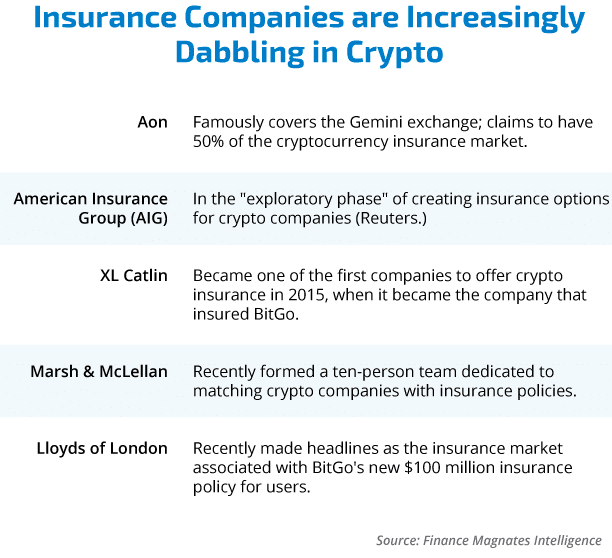
In order for institutions to be fully engaged with Digital Assets, they are going to need a third party to look after their assets - a role which has historically been provided by custodians.The regulators in most jurisdictions insist that the organisations that manage your funds have to be independent from the entity that physically looks after the assets. The good news is that the options and choices for those looking for custody solutions for their Digital Assets continues to evolve. Metaco has announced that it is using Aon(the world’s second largest...
However, the first firm it has agreed to look after it’s Digital Assets on a public Blockchain is Bakkt. Bakkt is a company backed by International Clearing Exchange (ICE) which, in turn, owns and runs over a dozen regulated stock exchanges around the world. BNY is keen to emphasise that it is currently providing “safekeeping of Digital Assets for Bakkt” and not providing a custody service for them, partly because BNY feels the need to have far more regulatory clarity before it can offer full custody services.
One of BNY’s bigger custody competitors, Northern Trust, is also looking at offering custody for...
However, the first firm it has agreed to look after it’s Digital Assets on a public Blockchain isBakkt. Bakkt is a company backed byInternational Clearing Exchange (ICE) which, in turn, owns and runs over a dozen regulated stock exchanges around the world. BNY is keen to emphasise that it is currently providing “safekeeping of Digital Assets for Bakkt” and not providing a custody service for them, partly because BNY feels the need to have far more regulatory clarity before it can offer full custody services. One of BNY’s bigger custody competitors,Northern Trust, is also looking at offering custody for Digital Assets (according to Forbes) as it realises it, too, needs to keep ‘up to speed’ with how it may be able to offer services for those that wish to deal with this fast developing new asset class – Digital Assets.However, it is not just both the massive and traditional existing custodians who are looking at offering custody services for Digital Assets.Anchorageis a newly launched, crypto-custody firm backed by Silicon-valley based and highly successful VC investors, Andreessen Horowitz.
Bank Frickis a private bank based in Liechtenstein which now has a range of Blockchain-banking services, including Digital Asset custody.BitGo, from California, has been offering for Bitcoins a qualified custodian service since 2018. The California-based company is using its six years of experience as a ‘security-as-a-service provider’ to provide financial institutions and fund managers with Digital Asset custodianship. Also from California, San Francisco-based Digital Asset exchange and wallet provider, Coinbase, added a crypto custody serviceto its offering in 2018.Coinbase Custody is a qualified custodian which enables institutional investors to store over 30 different Digital Assets securely with a regulated and insured third-party storage solutions provider. Regulated Digital Asset exchange, Gemini,launched its qualified custodian service for institutional investors also in 2018.
Fidelity Digital Assetsis the recently launched crypto-venture by Fidelity Investments Inc, which has$7.2 trillion of clients assets. The New York-based asset manager launched its crypto custody service in March 2018. Also in New York, Digital Asset exchange itBitlaunched a crypto-custody service last year to complement its exchange and Over The Counter (OTC) business. As a regulated New York State Trust Company, itBit ensures that all customer assets and funds are fully backed by mandatory capital reserves. Alternative asset custodian Kingdom Trust, launched in 2017, was one of the first custodians to provide Digital Asset storage solutions. Currently, the Kentucky-based company has become a market-leading qualified Digital Asset custody service, with insurance provided by Lloyd’s of London. Koine, launched in June 2019, offers Digital Asset custody and settlement for institutional clients. The London-based start-up is targeting trading venues, institutional investors, Digital Asset issuers, and market infrastructure providers.
Prime Trustis a Las Vegas-based qualified Digital Asset custodian which supports Bitcoin, ETH, and ERC20 tokens. Finally, Xapois one of the longest-standing Bitcoin storage solution providers. In the past five years, the Hong Kong-based company has grown its assets in storage to over 700,000 BTC (around $5.6 billion), making it the largest Digital Asset custodian in the world. No wonder Coinbase and Fidelity arereportedly in talks to acquire Xapo!
So clearly there is considerable interest from various different companies in offering custody for Digital Assets. Although there is an argument that, given the de-centralised and immutability that Blockchain technology offers, do we need custodians, and could their services be replaced by using a trustee? This is significant, as in the UK, you currently do not need to be regulated by the Financial Conduct Authority (FCA), to be a trustee, which potentially could reduce the amount of regulatory capital a company needs and it lowers an organisation’s insurance premiums, and would also help in reducing the compliance monitoring costs.
We wrote a few weeks ago about how theSingapore Government was developing a Blockchain-powered platform, allowing various Singaporean academic institutions to be able to enter their students' qualifications on to a Blockchain.
This is important because many CVs include information that is incorrect – in one survey of 5,000 CVs, it was found that 80% of CVs had at least one incorrect piece of information! By having qualifications and experience recorded on a Blockchain, it creates a transparent immutable record for relevant people to see.
It is understood that The United Arab Emirates (UAE) is now also going to be using Blockchain technology to hold and manage academic records, meaning that over 75,000 students’ qualifications will now be available online.
These are good examples of how Blockchains can help build trust and help to...
This is important because many CVs include information that is incorrect – in one survey of 5,000 CVs, it was found that80% of CVs had at least one incorrect piece of information! By having qualifications and experience recorded on a Blockchain, it creates a transparent immutable record for relevant people to see.
It is understood thatThe United Arab Emirates (UAE) is now also going to be using Blockchain technology to hold and manage academic records, meaning that over 75,000 students’ qualifications will now be available online.
These are good examples of how Blockchains can help build trust and help to reduce fraud although, the users will not be aware of what technology is being used to make this happen - nor will they care.
In the hyper-competitive grocery market, anything which one supermarket can give them an edge is bound to be copied by its competitors. Carrefour has said it will increase the number of products it sells using its Blockchain platform which offers greater transparency as to where these products originate from, where they were packed or picked, and if it subject to any genetically modified organisms, antibiotics or pesticides. It is now looking to expand in the future by adding non-food lines, i.e. clothing, as well as more information such as how much the farmer earns out of the shelf price. It...
In the hyper-competitive grocery market, anything which one supermarket can give them an edge is bound to be copied by its competitors. Carrefour has said it will increase the number of products it sells using its Blockchain platform which offers greater transparency as to where these products originate from, where they were packed or picked, and if it subject to any genetically modified organisms, antibiotics or pesticides. It is now looking to expand in the future by adding non-food lines, i.e. clothing, as well as more information such as how much the farmer earns out of the shelf price. It is also experimenting with ways to identify products which do not rely on a “quick response’ (QR) code.
Emmanuel Delerm,Carrefour’s Blockchain project manager, told Reuters “The Blockchain initiative has proved most popular so far in China - where it is already common for shoppers to scan QR codes, followed by Italy and France, with some people spending as long as 90 seconds reading the provenance information. They are interested in information about the origin of products and how animals are cared for, with one video of a farmer with his chickens proving popular, millennials are buying less, but buying better products for their health, for the planet.” To date, Carrefour has focused on using Blockchain technology to provide details on its own label brands. However, it has also been collaborating with Nestle to give consumers access to information for Nestle’sMousline potato puree products, thus allowing customers to be able to see it is only made from French potatoes. It is not just Carrefour which is using QR codes and Blockchain technology to allow customers to get detailed information about the food they are buying - SAP has a platform too. Blueberry farmers in Chile are adding QR codes to their products so that the end-buyer is able to track the journey from the farm to the shelf. As reported in aForbes article– “by simply scanning the QR code with our smartphones, we’ll see proof of where the berries were grown, learn about the farm’s sustainability practices, and be assured that the harvesters are well-treated under fair labor laws. Blockchain will be behind it all”. In Asia, theSouth China Morning Post reported that Alibaba is trialling a project with four farmers in New Zealand to enable consumers to be able to identify what raw ingredients have been used, simply by using their mobile phones to scan the QR code. The intention is to build a “Food Trust Framework”, giving more information about the food consumers are buying. In the event of there being a problem, e.g. some form of contamination getting into the food distribution chain, if one is able to track the provenance using Blockchain technology, it will be faster to identify the source of the problem.
The United Nations, in 1996, established the United Nations Centre for Trade Facilitation and Electronic Business (UN/CEFACT).
UN/CEFACT was mandated to find ways to improve global coordination and cooperation in trade facilitation and electronic business standards.
Its main priority continues to encourage interoperability: simplifying the exchange of information up and down the supply chain, including commercial and governmental processes. TradeLens has tried to digitise the written standards that UN/CEFACT created, as it has striven to harness Blockchain technology to bring greater traceability and transparency to international shipping of goods. It processes over 10 million shipping events on a weekly basis.
The challenges of interoperability are considerable for those involved in global logistics when different players in a supply chain...
UN/CEFACT was mandated to find ways to improve global coordination and cooperation in trade facilitation and electronic business standards.
Its main priority continues to encourage interoperability: simplifying the exchange of information up and down the supply chain, including commercial and governmental processes.TradeLens has tried to digitise the written standards that UN/CEFACT created, as it has striven to harness Blockchain technology to bring greater traceability and transparency to international shipping of goods. It processes over 10 million shipping events on a weekly basis.
The challenges of interoperability are considerable for those involved in global logistics when different players in a supply chain cannot agree on different definitions. An example of this is when shippers, carriers, and customs authorities continue to rely on paper documents simply because their computers can’t talk to each other! Having agreed standards and definitions enables humans and computers to operate on “the same page”, to help improve the efficiency of container shipping, global trade, and world economies.
French shipping firm, CMA CGM Group, and the Swiss shipping line, MSC Mediterranean Shipping Company (MSC), have recently announced that they arejoining TradeLens’ Blockchain-powered shipping platform to help improve their supply chain logistics.“Digital collaboration is key to the evolution of the container shipping industry. The TradeLens platform has enormous potential to spur the industry to digitize the supply chain and build collaboration around common standards,” reported André Simha, Chief Digital & Information Officer, MSC.
TradeLens has been developed by AP Moller Maersk and IBM, using IBM’s Blockchain expertise. Maersk was established in 1906 and is one of the world’s largest shipping firms. This is another interesting example of “collaborative capitalism” - one company develops a Blockchain platform and then allows what have historically been its competitors to use the same platform.
Tradelens now has over 100 companies using its platform, giving shippers, carriers, freight forwarders, customs officials, port authorities, inland transportation providers, and others a complete view of their respective data. It also allows participants to digitally collaborate as cargo moves around the world. The platform aims to improve the efficiency and trust across the global supply chains, to make them more transparent and secure in order to foster greater collaboration.
As with a number of examples where Blockchain technology is increasingly being used, the end customer will not be aware, nor do they need to know anything about the technology that is being harnessed by multinational organisations to improve business’ efficiency.
TradeLens is also a good example illustrating how Blockchains can be used to handle large amounts of data globally by many different independent parties, who in the past have had very little co-operation between them since they are often in competition with each other.
Facebook is potentially going tooffer their staff to be paid in Globalcoin (which is potentially the name for Facebook’s soon-to-be-launched Digital currency) on a monthly basis i.e. as their salary, further illustrating how Digital Assets are coming into our day to day lives.
It is rather ironic that Facebook has been selling advertisers’ data it has been gathering on its clients – generating $16.8 billion in 2018 - and trust in Facebook has been plummeting. In a recent article, it was claimed that “more than 60% of Americans do not trust Facebook with their personal information”, so why will Facebook customers buy and use Globalcoin? Surely for any medium of exchange – a currency for transactions - one needs to have confidence and trust in the currency? It is potentially for this reason that Facebook has, allegedly, agreed to cede control of the...
It is rather ironic that Facebook has been selling advertisers’ data it has been gathering on its clients – generating$16.8 billion in 2018 - and trust in Facebook has been plummeting. In a recent article, it was claimed that “more than60% of Americans do not trust Facebook with their personal information”, so why will Facebook customers buy and use Globalcoin? Surely for any medium of exchange – a currency for transactions - one needs to have confidence and trust in the currency? It is potentially for this reason that Facebook has, allegedly, agreed tocede control of the governance of its new Digital currency to an independent board.
Meanwhile, the rollout of Globalcoin is gathering momentum, as it has been reported that Facebook has been in discussions with the Commodity Futures Trading Commission (CFTC) in the USA to help smooth the way for Globalcoin, ready for its launch. It is understood that Facebook is also in discussion with Visa and Mastercard.
Mark Zuckerberg, Facebook’s CEO, recently commented on the future of Facebook saying: “Payments is one of the areas where we have an opportunity to make it a lot easier… I believe it should be as easy to send money to someone as it is to send a photo.” Globalcoin is a very significant evolution for the Digital Assets’ sector, as it will allowFacebook’s 2.3 billion monthly users, as well as its 7 million advertisers, to use this currency and bypass the traditional banking system. But only time will tell if Facebook’s customers' trust is sufficient to using its new Digital currency. P.S. As if Facebook needed it! It is being reported that Facebook is going to operate Globalcoin on a closed Blockchain, and charge the organisations operating each of the100 nodes $10 million, so generating an extra $1 billion. This additional income will be a drop in the ocean for Facebook as, at the end of March 2019, it was sitting onover $41 billion of cash!
Wherever there is money to be made, it seems there is always someone who wants to carry out “dodgy dealings”, and unfortunately, this does not help the public’s perception about Cryptocurrencies.
Law courts globally continue to hand out prison sentences to people who have some form of involvement with Cryptos and, while some of the nefarious activities are clearly criminal, some of those perpetrators are indeed extraordinary.
Take Mr. Ye Lin Myint who was jailed for two years in Singapore, as he admitted to criminal intimidation and harassment against a multitude of people. The 36-year-old threatened to harm 30 people unless they transferred one Bitcoin each to him. However, instead of signing off his threats from Harry Potter’s arch-enemy “Lord Voldemort,” he added an extra “R” and signed himself as “Lord...
Law courts globally continue to hand out prison sentences to people who have some form of involvement with Cryptos and, while some of the nefarious activities are clearly criminal, some of those perpetrators are indeed extraordinary.
Take Mr. Ye Lin Myint who was jailed for two years in Singapore, as he admitted to criminal intimidation and harassment against a multitude of people. The 36-year-old threatened to harm 30 people unless they transferred one Bitcoin each to him. However, instead of signing off his threats from Harry Potter’s arch-enemy “Lord Voldemort,” he added an extra “R” and signed himself as “Lord Voldermort”!
Meanwhile, rather than “whistle while you work” (aka Snow White and the seven dwarfs), anAustralian government employee is being charged for “mining while he worked”. The 33-year-old man has been charged for mining Cryptocurrencies using government equipment that he had modified. This type of illegal Cryptocurrency mining using government property is similar to the story reported by the BBC last year about the Russians who allegedly rigged-up a supercomputer atThe Federal Nuclear Centre in Sarov, western Russia,to mine Bitcoins.
Then there is the case of Mark Karples, who has spent 11 months in a Japanese prison due to his involvement with the Mt. Gox affair, where over 600,000 Bitcoins (which would be worth today just under $5 billion) went missing.Karples has been charged with tampering with Mt. Gox’s records and was given a 2.5 year suspended sentence. So, regardless of which jurisdiction, we have already seen people “doing time” and no doubt there will be many others facing the “strong arm of the law”. Hopefully, as these charlatans are apprehended and dealt with, this will deter others from carrying out criminal activities involving Crypto and Digital Assets.
The fact that “bad actors” are being sentenced ought to offer reassurance that people working with Digital Assets are subject to the normal law of the land and will face appropriate consequences.
FlashBoys, in Holland, has been working on a number of initiatives using Blockchain technology to help the retail sector in an effort to reduce fraud and improve transparency in supply chains.
One of the projects that it has developed is to use Near Field Communication (NFC) chips, and have these placed on bottles of wine or within items of clothes. An advantage of NFC chips is that no special equipment is required to read them, just a smartphone, and a product’s provenance can be held on the chip as well as other details, helping to tackle the sale of counterfeit goods.
Indeed, Flashboys is currently in discussions with Luxottica, the world biggest eyewear manufacturer, to have an NFC chip inserted into a pair of sunglasses. Once the chip is in the...
One of the projects that it has developed is to use Near Field Communication (NFC) chips, and have these placed on bottles of wine or within items of clothes. An advantage of NFC chips is that no special equipment is required to read them, just a smartphone, and a product’s provenance can be held on the chip as well as other details, helping to tackle the sale of counterfeit goods.
Indeed, Flashboys is currently in discussions withLuxottica, the world biggest eyewear manufacturer, to have an NFC chip inserted into a pair of sunglasses. Once the chip is in the sunglasses, it could create a unique token which could have information about the owner stored on a Blockchain. This would hopefully reduce the sale of second-hand sunglasses, as the new owner could easily scan them to see if they have been reported as lost/stolen. Ideas such as these are also being explored by fashion retailers, as they struggle to drive sales to their ‘bricks and mortar shops’ and find ways to differentiate themselves from online sales. One way would be to insert an NFC chip into items of clothes that are only sold in-store and say to customers “if you buy from one of our shops, you will get a discount of another purchase, or you will be able to see who and how your garment has been made”. By using an NFC chip, customers could use their mobile phones and retrieve discounts, and/or access to various different types of information. This could help retailers to encourage customers to use their physical shops more.
Meanwhile,American Express is looking at how it can use Blockchain technology to upgrade the many different loyalty programs it offers. Qiibee, founded in 2015 and based in Switzerland, also believes that Blockchain is a technology ideal for the loyalty industry as it offers brand owners more options and ways in which they can engage with customers, and hence offer them better value and information.Qiibee is trying to address the challenge such as when customers shop with a brand they like, they are rewarded with the branded token, ending up collecting numerous different tokens. These, in turn, are a hassle to use. However, by using the Qiibee platform, they can exchange the tokens they need from someone who requires the tokens they themselves have i.e. swap tokens! So, it would appear that the retail sector is embracing Blockchain technology in a variety of ways, but I suspect, as this industry had greater adoption, more ways will be found to harness it still further for both on and off-line retailers.
The British Blockchain & Frontier Technologies Association is a new industry body who will provide a clear voice for the global blockchain and frontier technologies industries, it’s members, stakeholders and the public good.


 The British Blockchain & Frontier Technologies Association is proud to partner with Fintech Worldwide for London FintechWeek 2019. All BBFTA Members can get a 20% discount on ticket prices using code BBFTA20 http://www.fintechweek.com?promo=BBFTA20