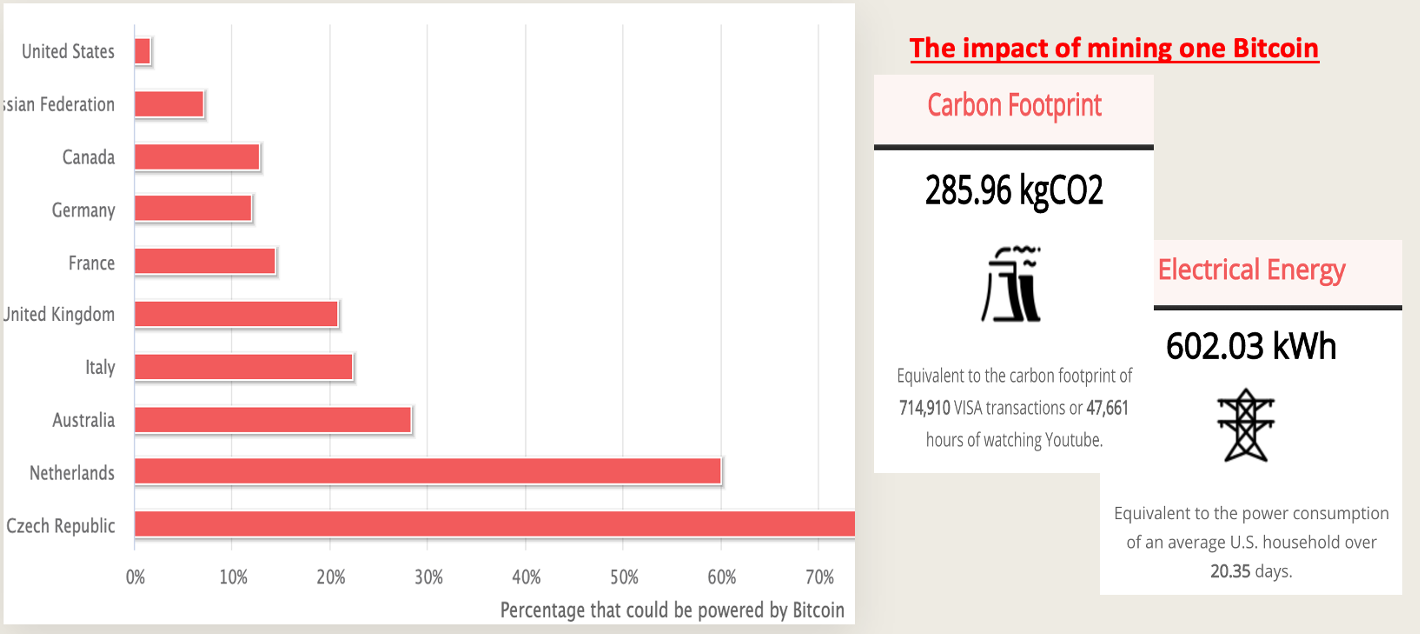
Cryptocurrencies have had considerable bad press historically because of the massive amount of electricity they consume. There is, as an example, Bitcoin, with its proof of work algorithm being cited as the very worst given the electricity that is needed to ‘mine’ when creating each Bitcoin. Digiconomist explains Bitcoin mining as, “The process of producing a valid block is largely based on trial and error, where miners are making numerous attempts every second trying to find the right value for a block component called the ‘nonce’, and hoping the resulting completed block will match the requirements (as there is no way to predict the outcome)”. This process consumes large amounts of electricity and the miner picking the correct nonce is paid in Bitcoins. Because of the huge amount of electricity that Bitcoin mining requires, many are concerned about the impact crypto mining is having on global warming. However, there have been studies which claim that 74% of the electricity Bitcoin miners use is from renewable energy sources. It is estimated that typically miners spend 89% of the Bitcoins they generate on paying for power, hence the pressure to find cheap sources of electricity
The amount of electricity Bitcoin mining consumes
Source: Digiconomist.net
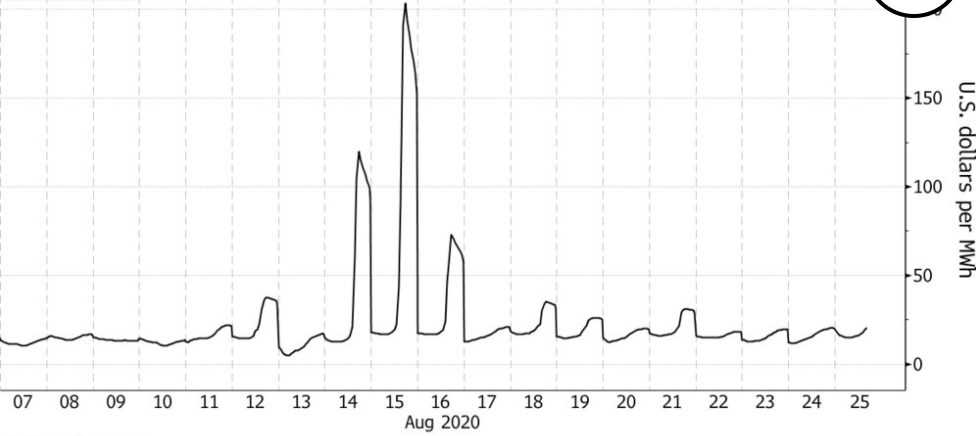
Of note, one of the ways to reduce the cost of electricity has been introduced to Texas where miners sign up to the Electric Reliability Council of Texas “controllable load resource”(ERCOT) which means users of power are paid to cut their consumption of electricity when the cost of power spikes. Texas has spent a considerable amount of monies on building solar and wind-renewable power generation which has led to cheap power but big spikes on cloudy days, or at night, when the wind is not blowing. In these meteorological conditions, Texan power is...
The amount of electricity Bitcoin mining consumes
Source: Digiconomist.net
Of note, one of the ways to reduce the cost of electricity has been introduced to Texas where miners sign up to the Electric Reliability Council of Texas “controllable load resource”(ERCOT) which means users of power are paid to cut their consumption of electricity when the cost of power spikes. Texas has spent a considerable amount of monies on building solar and wind-renewable power generation which has led to cheap power but big spikes on cloudy days, or at night, when the wind is not blowing. In these meteorological conditions, Texan power is supplemented by expensive gas turbines in an attempt to smooth out volatile electricity prices.
Cost of electricity in Texas
Source: Genscape
Earlier this year, Lancium, a company owned by Royal Dutch Shell, claimed to be the first firm to sign up to a load-only Controllable Load Resource as it is typically a user of power, not a generator. However, by decreasing the amount it consumes when electricity prices spike and are high, and using more power when electricity is cheap, Lancium claims it can reduce its electricity bills by 50%. Meanwhile, in order to take advantage of cheap power, a Bitcoin mining firm called Layer1 (backed by PayPal co-founder and crypto-billionaire, Peter Thiel) has set up a Bitcoin mining firm in Texas. Layer1 claims it has increased its profit margins by 700% by taking advantage of load-only Controllable Load Resource. However, this has not escaped the attention of Lancium, which has filed a law suit against Layer1 for an infringement of its Lancium’s patent for controlling the amount of power being used during peak electricity prices. Wow, could we see Shell take on PayPal’s co-founder in court - who will blink first?
Either way, the above demonstrates that Bitcoin mining use of electricity is a little more complex than it first seems. Since crypto miners can be programmed to increase or decrease their power requirements depending on power prices they may indirectly be able to help reduce the cost for other electricity users, such as keeping the air conditioning on during a hot summer’s day in the Lone Star State!