
 The global daily trading value on the world's digital exchanges is between US$50 billion to US$100 billion and this is set to grow if we are going to have greater institutional interest in digital assets. In a recent survey carried out by Crypto Research Report and Cointelegraph Consulting, based on 55 asset managers who, alone, have over €719 billion of assets under management, it found that 61% of wealthy Europeans already have, or plan to have, exposure to digital assets. It is not just individuals but corporations which are also investing in digital assets. In the last few weeks we have seen Microstrategy (a NASDFAQ-listed company) announce that it has raised $650 million to invest into Bitcoin. Furthermore, the 169-year old Massachusetts Mutual Life insurance company in the US has confirmed its investment of $100 million into Bitcoin. Given this sort of demand from banks and asset managers clients, it explains why we are seeing a need for the building of more infrastructure to make it easier for other institutions in various global jurisdictions to be able to invest in digital assets. Indeed, JP Morgan claims institutional demand for Bitcoin could grow to be as much as $600 billion, nearly a 80% increase from the current $355 billion of Bitcoin’s current capitalisation.
Based in Singapore, South East Asia’s biggest bank (DBS), has announced the launch of a
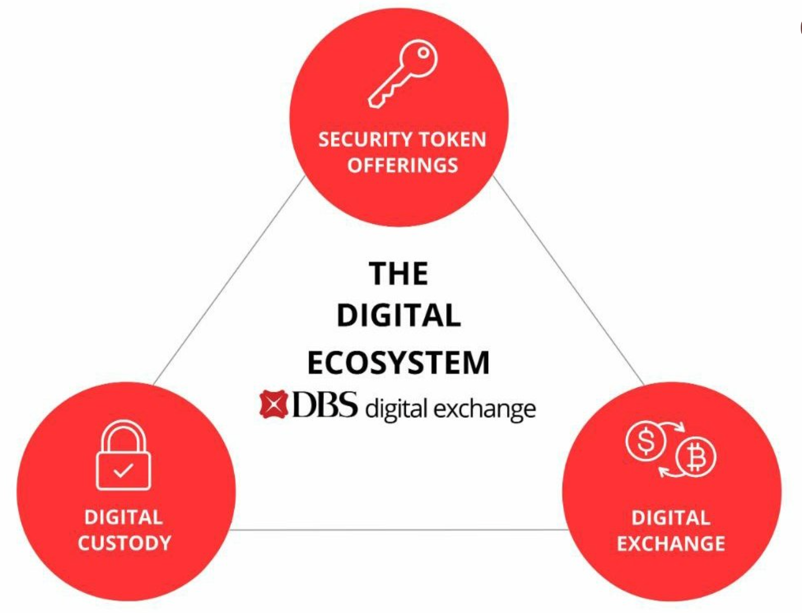
Digital Exchange, backed by the bank, offering institutions and HNWs access to be able to trade and provide custody services for digital assets and digital currencies. DBS Bank will also be offering the ability for companies to raise capital via tokenisation (STOs), as well as offering a listing service for these new tokenised digital assets. The Singapore Exchange will own 10% of this new digital exchange, which has been given (in principle) approval by the Monetary Authority of Singapore as an ‘approved exchange’. This type of status...
Digital Exchange, backed by the bank, offering institutions and HNWs access to be able to trade and provide custody services for digital assets and digital currencies. DBS Bank will also be offering the ability for companies to raise capital via tokenisation (STOs), as well as offering a listing service for these new tokenised digital assets. The Singapore Exchange will own 10% of this new digital exchange, which has been given (in principle) approval by the Monetary Authority of Singapore as an ‘approved exchange’. This type of status...
#FrontierInsights